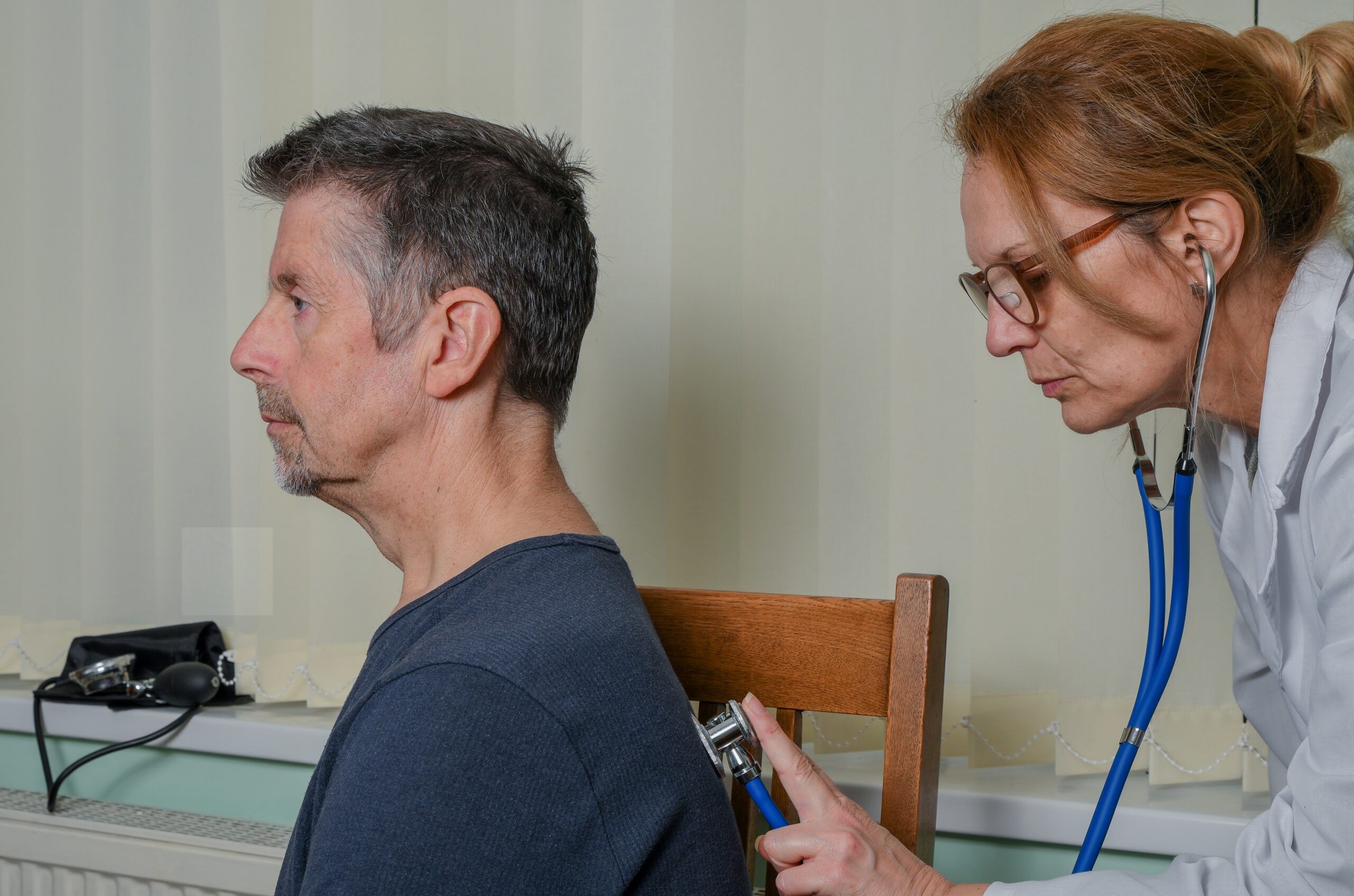




What is occupational COPD?
Chronic obstructive pulmonary disease (COPD) is an umbrella term for certain types of lung diseases, typically emphysema and chronic bronchitis, that make breathing difficult by obstructing airflow.
Emphysema damages the air sacs (alveoli) in the lungs, reducing their ability to expand and contract, while chronic bronchitis involves inflammation and mucus production in the bronchial tubes, leading to persistent coughing and difficulty breathing.
Occupational COPD refers to cases of COPD that are caused or exacerbated by long-term exposure to harmful substances in the workplace, such as dust, chemicals, fumes, or other irritants. These occupational exposures can lead to or worsen the symptoms of COPD, contributing significantly to the disease’s development in affected workers.
Am I eligible for workers’ comp for occupational COPD in North Carolina?
In North Carolina, most businesses with 3 or more employees must carry workers’ compensation insurance, which covers work-related injuries and occupational illnesses and diseases like COPD. So, if your job caused or contributed to the development of COPD, you’re likely eligible for workers’ compensation benefits as long as you’re not an independent contractor or another type of worker exempt from coverage.
Workers’ compensation is no-fault insurance, so you don’t have to prove that your employer negligently caused your condition; you only need to be able to prove that it’s a direct result of your job or your work environment.
What does NC workers’ comp cover?
In North Carolina, workers who develop COPD due to their jobs may be eligible for several types of workers’ compensation benefits. These benefits are designed to cover medical expenses and lost wages and help workers transition to other employment if necessary.
Some of the benefits you might be able to claim include:
- Medical benefits. Coverage for doctor visits, medications, treatments, and any necessary medical devices (such as oxygen therapy).
- Wage loss benefits. If your COPD prevents you from working, you may receive compensation for lost wages, typically around two-thirds of your average weekly wage.
- Vocational rehabilitation benefits. Assistance with retraining or job placement if you’re unable to return to your previous job due to your condition.
These benefits aim to support workers in managing their occupational COPD and maintaining financial stability while undergoing treatment. In cases of permanent disability, workers may be eligible for additional compensation through permanent partial disability (PPD) or permanent total disability (PTD) benefits.
How do I file a workers’ comp claim for occupational COPD in NC?
To file a North Carolina workers’ compensation claim for occupational COPD, you need to take the following steps:
- Seek medical care. Visit an employer-approved health care provider to get a diagnosis, begin treatment, and obtain documentation that your COPD is linked to your job.
- Notify your employer. Inform your employer in writing about your condition within 30 days of your diagnosis. This step is crucial to ensuring your claim is valid.
- Submit Form 18. File Form 18 with the North Carolina Industrial Commission (NCIC) as soon as possible, but no later than 2 years after your diagnosis. You should know within a couple of weeks if your claim is approved.
- Consider legal assistance. If your claim is denied or you want help gathering evidence to strengthen your claim, consider consulting a local workers’ compensation attorney who can guide you through the process and help you file an appeal if necessary.
By following these steps, you can avoid making small mistakes that can compromise your claim and prevent you from securing the benefits you deserve.
Is it hard to prove COPD is work-related?
Proving that COPD is work-related can be challenging, but it’s not impossible. Since COPD often develops gradually and can be caused by multiple factors, linking the condition directly to workplace exposure requires thorough documentation and medical evidence.
You will need to demonstrate that your job exposed you to harmful substances—such as dust, fumes, or chemicals—that contributed significantly to the development or worsening of your COPD.
This may involve:
- Medical reports linking your COPD to specific workplace conditions.
- Documentation of long-term exposure to respiratory irritants.
- Witness statements or records from coworkers or supervisors supporting your exposure.
- Expert testimony from doctors or occupational health professionals.
Given these complexities, working with an experienced workers’ compensation attorney who can connect you with the right medical experts and help you access the work records needed to support your claim can greatly improve your chances of proving your COPD is work-related.
Need help with your NC workers’ comp claim for occupational COPD?
If you’ve developed occupational COPD and need assistance with your workers’ compensation claim, Wilder Pantazis Law Group is here to help. These types of claims are notoriously challenging for injured workers, and having an experienced attorney from the start can prevent your claim from being wrongfully denied so you can receive the compensation you need for your recovery.
With over 85 years of combined experience, the skilled work injury attorneys at Wilder Pantazis Law Group are committed to helping workers in North and South Carolina recover maximum benefits. We offer free consultations and work on a contingency basis, meaning you don’t pay unless we win your case.
Contact us today for a free, no-obligation consultation to see how we can help maximize your occupational COPD claim.
Contact Us