



Eligibility requirements for workers’ compensation in North Carolina
Have you been hurt as a roofer in North Carolina? You might be entitled to workers’ compensation.
There are 3 factors to consider in terms of eligibility:
- Your employer. Most businesses in North Carolina with 3 or more employees are required to have workers’ compensation insurance. However, there are exceptions for businesses in certain industries, including agriculture, logging and sawmill operations, and domestic housekeeping work.
- Your injury. Your injury must be work-related to qualify for workers’ comp. It can be either a one-time traumatic injury or an ongoing occupational disease or illness.
- Your employment status. Some roofers work as “independent contractors” rather than “employees” of a business. If you’re an independent contractor, you are NOT eligible for workers’ compensation.
Workers’ compensation benefits for roofers
There are 3 main types of workers’ comp benefits:
- Medical benefits. Medical payments can cover everything from surgeries and medications to assistive devices and physical therapy.
- Wage loss benefits. Lost wages are calculated according to the severity of your injury and how long you’re expected to be out of work, but are typically two-thirds of a worker’s average weekly wage.
- Death benefits. Death benefits go to the immediate family of the deceased; these can include funeral expenses and lost income.
How to file a workers’ compensation claim in North Carolina
Injured workers aren’t automatically given these benefits. Instead, there are rules and procedures that must be followed to apply for them.
Here are the steps to filing for workers’ comp in North Carolina:
- Seek medical attention and have it documented as a workplace injury.
- Notify your employer of your injury in writing within 30 days.
- File a claim with the North Carolina Industrial Commission by submitting Form 18.
- 6 for help after a serious injury or a denied claim.
Most common roofer injuries
Roofing is one of the most hazardous professions, with roofers facing numerous risks daily.
Here’s a list of the most common roofer injuries and how they typically occur:
- Fall-related injuries. Perhaps the most obvious risk for roofers is falling, which can lead to fractures, traumatic brain injuries, spinal cord injuries, and even fatalities. These falls can occur due to a variety of reasons, including loss of balance, slippery surfaces (especially after rain or due to moss/algae), weak roof materials giving way, or tripping over equipment.
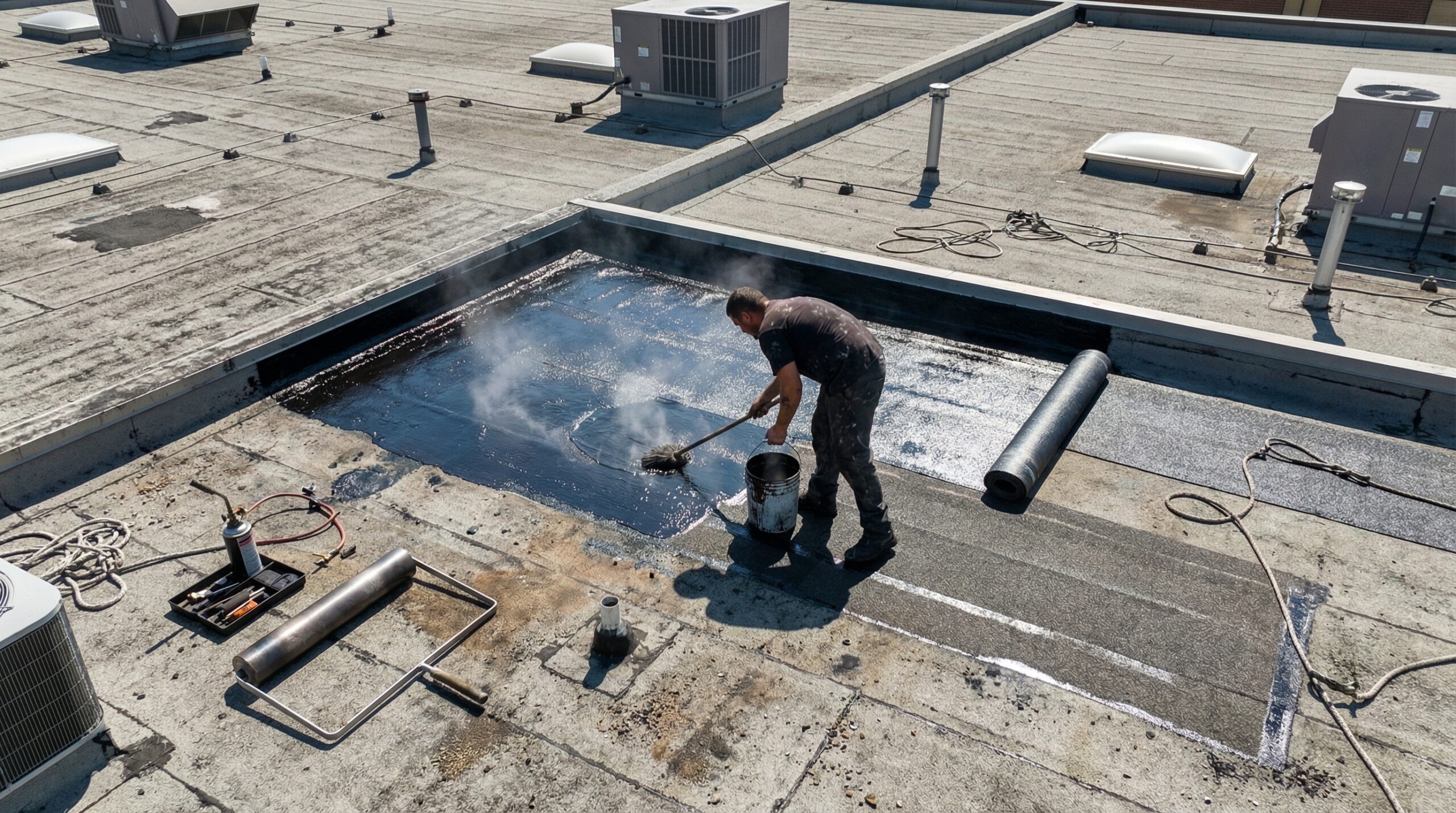
- Burns. Roofers often use hot tar and torch-down applications. Accidental spills, splatters, or mishandling can lead to severe burns.
- Musculoskeletal injuries. Roofing involves heavy lifting, bending, kneeling, and repetitive motions. Over time, these actions can lead to strains, sprains, repetitive stress injuries, and other musculoskeletal disorders. Constantly working on sloped surfaces puts stress on the back and knees in particular.
- Eye injuries. Small particles, splinters, or chemicals can get into a roofer’s eyes, causing injuries. This happens especially when they’re cutting materials or when the wind blows debris around.
- Cuts and abrasions. Roofers use sharp tools like knives and nail guns. Improper use, mishandling, or accidents can cause cuts or puncture wounds.
- Heat-related illnesses. Roofers often work in direct sunlight and high temperatures. This environment can lead to heat exhaustion, heat cramps, or, in extreme cases, heat stroke.
- Electrocution. Coming into contact with overhead power lines or using electrical equipment on wet surfaces can pose electrocution risks that result in internal organ damage, cardiac arrest, and death.
- Toxic exposure. Roofing materials, especially in older buildings, might contain harmful substances like asbestos or lead. When disturbed, these materials can release toxins that, when inhaled, can lead to serious respiratory issues and long-term health conditions like asbestosis and mesothelioma. Additionally, solvents used in various adhesives, sealants, and cleaners can emit volatile organic compounds (VOCs). Inhalation of these compounds can lead to headaches, dizziness, and, in more severe cases, damage to the liver, kidneys, and central nervous system.
It’s essential for roofers to be trained in safety procedures, have access to and use appropriate safety gear, and ensure they’re always aware of their surroundings to minimize these risks.
Statistics on work injuries in North Carolina
While the statistics on roofing deaths are grim, the statistics on overall workplace injuries in North Carolina are more promising. In 2021, the BLS reported that there were 67,700 cases of nonfatal work injuries and illnesses within the state.
This represents a rate of 2.2 cases per 100 workers, which is lower than the national rate of 2.7 cases per 100 workers.
Notable statistics on roofer injuries
Roofers have the greatest fall risk of any type of construction worker. In fact, according to the BLS, falls involving nonfatal injuries to roofers occurred at a rate of 86.9 cases per 10,000 full-time workers in 2016.
The workers with the second highest number of fall-related injuries were painters, with a rate of 75.0 cases per 10,000 full-time workers that year. These rates far exceeded the rate for total worker nonfatal fall injuries combined, which was only 5.1 cases per 10,000 full-time workers.
Legal options for independent contractors injured at work
If you’re a roofer working as an independent contractor, you won’t be eligible for workers’ compensation benefits. However, you might still be able to recover damages if the accident wasn’t your fault. You can file a personal injury lawsuit against the negligent party who caused your injury.
Here are some examples of parties that you can sue:
- The manufacturer of faulty equipment
- The property owner where you were injured
- Other companies that were contracted by your employer (inspectors, construction crews, cleaning crews)